Japan rewards first-time visitors more than almost anywhere else. Trains run to the minute, cities are spotless and safe, and within a single day you can move from a skyscraper district to a moss-covered temple garden. The challenge is choosing what to leave out. This ten-day route covers the classic “Golden Route” at a pace that leaves room to wander.
Days 1–3: Tokyo
Give Tokyo at least three nights. Base yourself near a major station such as Shinjuku, Shibuya or Tokyo Station so the rest of the city is a short train ride away.
- Asakusa for Sensō-ji, Tokyo’s oldest temple, and the snack stalls of Nakamise-dōri.
- Meiji Jingu and Harajuku — a forested shrine, then the city’s youth fashion streets five minutes away.
- Shibuya Crossing at dusk, ideally watched from above before you walk it.
- Tsukiji Outer Market for a breakfast of grilled scallops, tamagoyaki and the freshest sushi of your trip.
On day three, consider a day trip to Nikkō or Kamakura for shrines, forests and a slower rhythm.
Days 4–5: Hakone and Mount Fuji
Hakone is the easiest escape from Tokyo into the mountains. Stay a night in a ryokan, a traditional inn where dinner is a multi-course kaiseki meal and the day ends in an onsen hot-spring bath. The Hakone loop — mountain railway, cable car, ropeway and a pirate-ship cruise across Lake Ashi — is a day out in itself, and on a clear morning Mount Fuji fills the horizon.
Fuji is famously shy. Clear views are most likely on crisp mornings in late autumn and winter, so plan Hakone early in the day and keep the afternoon flexible.
Days 6–8: Kyoto
Take the shinkansen bullet train to Kyoto, Japan’s imperial capital for over a thousand years. Kyoto is best explored early, before tour groups arrive.
- Fushimi Inari Taisha — walk beyond the first gates and the crowds thin out among thousands of vermilion torii.
- Arashiyama — the bamboo grove at sunrise, then Tenryū-ji’s garden.
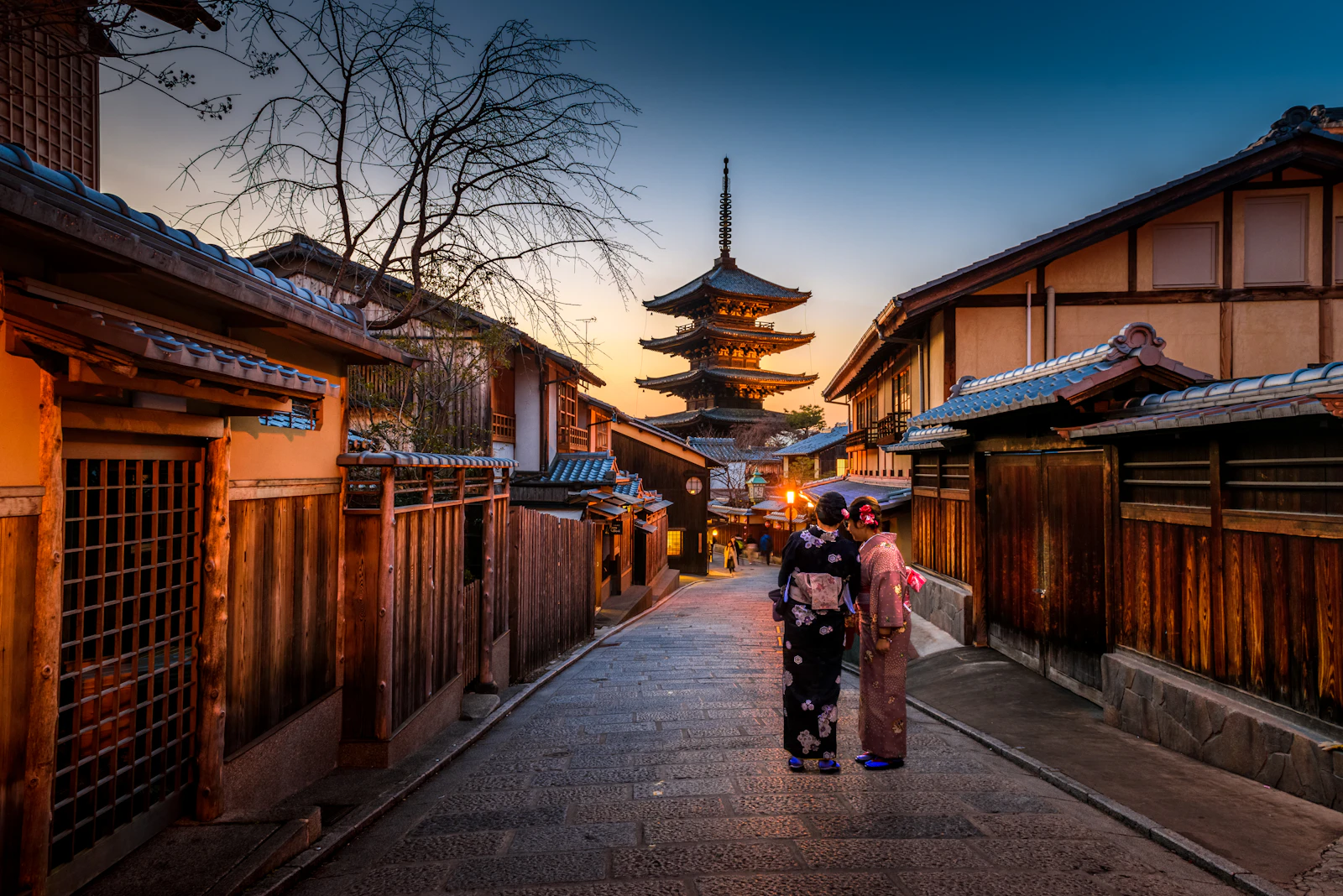
- Gion and Higashiyama — wooden machiya houses, stone lanes and Kiyomizu-dera on its wooden stage.
Use one of your Kyoto days for Nara, under an hour away, where the giant bronze Buddha of Tōdai-ji sits among free-roaming deer.
Days 9–10: Osaka
End in Osaka, Japan’s kitchen. Spend an evening in Dōtonbori eating takoyaki and okonomiyaki under the neon, and visit Osaka Castle by day. Kansai International Airport is an easy train ride away for your flight home. With an extra day, Hiroshima and Miyajima make a moving and beautiful side trip by bullet train.
Practical tips
- Rail passes: compare the cost of a Japan Rail Pass with point-to-point tickets for your exact route — for a simple Tokyo–Kyoto–Osaka trip, individual tickets are often better value.
- Luggage: use a luggage forwarding service (takkyūbin) to send big cases between hotels and travel light on the trains.
- Cash and cards: cards are widely accepted in cities, but carry some yen for small restaurants, shrines and rural areas.
- Etiquette: no tipping, quiet voices on trains, and shoes off wherever you see a raised floor or slippers at the door.
Prefer to have the logistics handled? Our escorted Japan tours follow this route with a tour manager, reserved bullet-train seats and a night in a traditional ryokan.